
Shaped wedding stationery is having a moment, and it’s easy to see why. It’s an intentional way to add character to your invitation suite, and the shape can carry through your wedding day in signage, styling, and other key design moments.
Shaped suites also cost more to create than a rectangle and can cost more to post. That doesn’t mean you shouldn’t include them...it just means you should know the numbers before you choose.
The shapes people are asking for
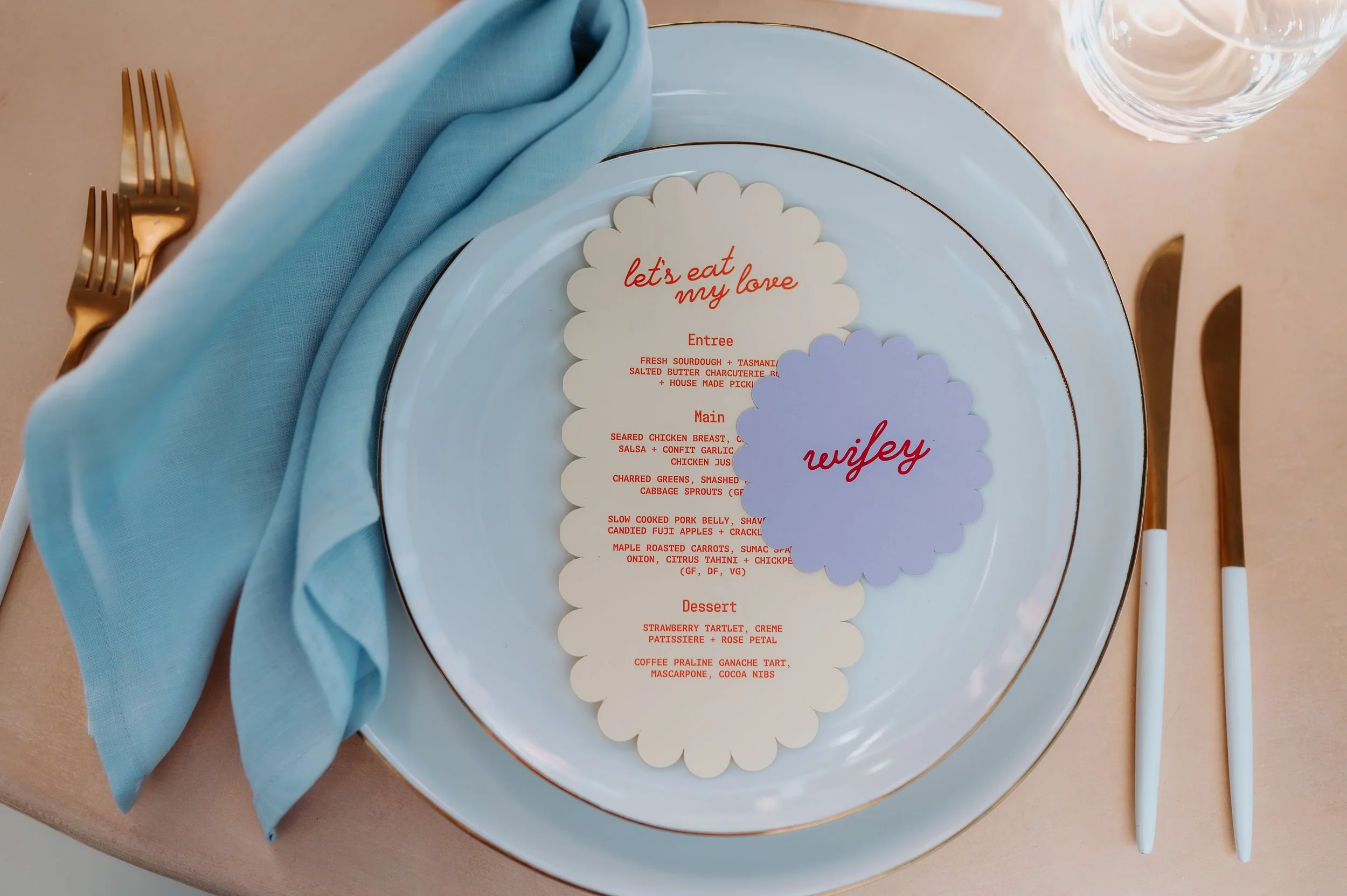
Arches are the most requested shape by a long shot, perhaps because they echo ceremony arches, windows and doorways. Metaphorically, they work beautifully. Scalloped-edge and pill-shaped designs are a more playful option, and they sit well with pastel palettes, florals and anything with a vintage skew.
Then there are custom die-cuts, which can be almost anything! They’re the most personalised option, and also the most expensive. We’ve seen bows, lemons, stars, oysters, and martini glasses...the possibilities are endless and come down to the imagination of you and your stationer.
What shapes do to your budget
A custom shape needs its own die or cut file, which is a one-off cost before you even make a single invitation. Standard shapes like a classic arch are cheaper because that tooling is already available.
After that, it comes down to time and materials. Each invitation is cut by laser or die cutter and then checked for clean edges, so 100 shaped pieces take a lot longer than 100 rectangles. Cutting a curve out of a rectangle also leaves offcuts, and that waste is built into the price.
What shapes do to your postage
The shape of the invitation itself doesn’t change your postage; the envelope does the posting, and the envelope is almost always rectangular. The costs creep in somewhere else.
A single flat card in a standard envelope can go as a small letter. Add a layered arch, thicker cardstock, a details card and an RSVP, and you’ve moved into large letter territory. Across 80 invitations, that difference adds up quickly, and that’s before you’ve paid for the RSVP return. Australia Post lists its current letter sizes and prices on its website, so it’s worth checking before you finalise your design.
Wax seals, ribbon and chunky layers push the thickness over the line, and oddly sized envelopes can be treated differently again. Here’s the rule we give every client: take one fully assembled invitation to the post office and have it weighed, measured and priced before you order the lot. We’ll happily make you a sample to do exactly that.
Practical things that nobody mentions
Delicate details are what to watch. The small points where two scallops meet, or a thin strip of paper left between cut-outs, can bend or tear in the post, so rounder, wider shapes travel better.
Shapes also take space away from your wording. An arch gives you less room at the top, which is why we set the text to the shape and not the other way around.
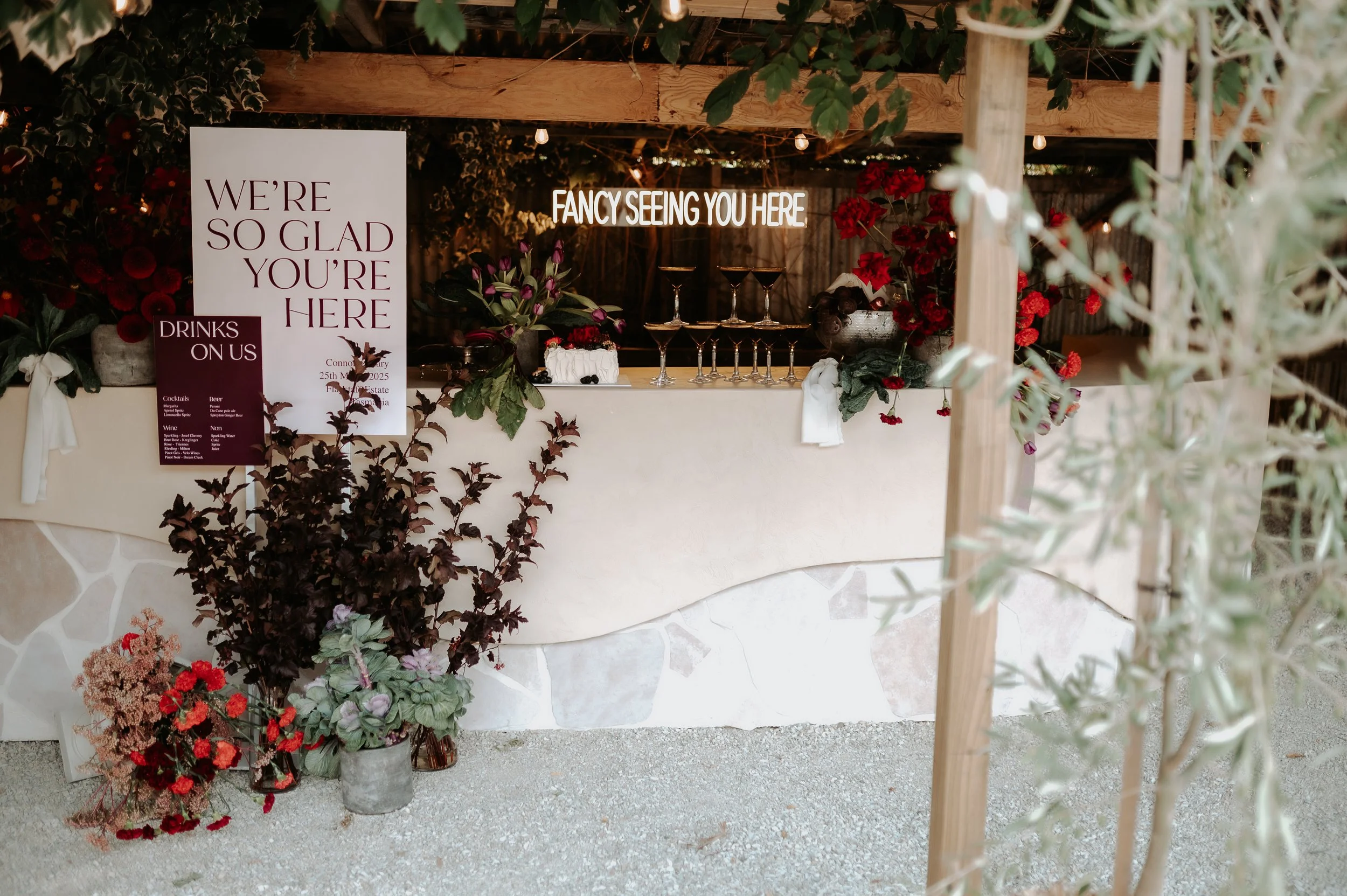
You don’t need every piece in the suite to be shaped, either. A shaped invitation with a standard RSVP card and details card still looks considered, costs less, and posts more easily. And if your photographer is shooting your stationery, a shaped piece gives them something to work with. The edges catch the light, and it looks great styled with florals or ribbon.
When to keep it rectangular
If your budget is tight and your guest list is long, put the shape where it counts. A shaped save the date or invitation with a simpler suite overall gives you the look without multiplying the cost across every piece.
Ready to talk shapes?
Send us your date, your guest count and a few images that you love, and we’ll tell you honestly what’s possible and what it’ll cost.
Love, Coco
